Thu 28 Nov 2024
Last night I attended an event in Westminster called The Lords work in mysterious ways? which was about reforming the House of Lords. I thought I’d share some headlines…
Labour MP, Fabian Hamilton, described how Augustus Pugin’s 200 year old red-leathered seats and golden fixtures and fittings had deliberately created a House of Lords for Britain’s aristocracy. He lamented the persistence of the hereditary peers, saying that being a lawmaker was “a privilege not a birthright” and made the point that their removal, currently working its way through parliament, was an overdue step and hardly revolutionary. He recalled Labour’s unfinished work on Lords reform, from the last time the party was in power, cautioning against the inertia that blocked past attempts at making substantial change.
Baroness Carmen Smith at 28 years old is the youngest peer ever. She pointed to the demographic disconnect of the House of Lords: 70% male, average age 71. “How can this chamber represent the public it is meant to serve?”. She called for proportional representation, co-opted expertise and limits on the time people can serve. She shared stories from the Lords about how the current model serves privilege rather than the public.
Other speakers included Mike Wright, Electoral Reform Society, who made the point that the House of Lords’ total membership surpasses China’s National People’s Congress. He championed an elected second chamber, urging the adoption of proportional representation to ensure regional voices are heard. Conservative MP, Simon Hoare, asked whether “we even need a bicameral system at all?” challenging assumptions that the House of Commons requires a counterweight. He argued that the House of Lords could evolve into a “committee of experts” or be replaced with simpler structures for accountability.
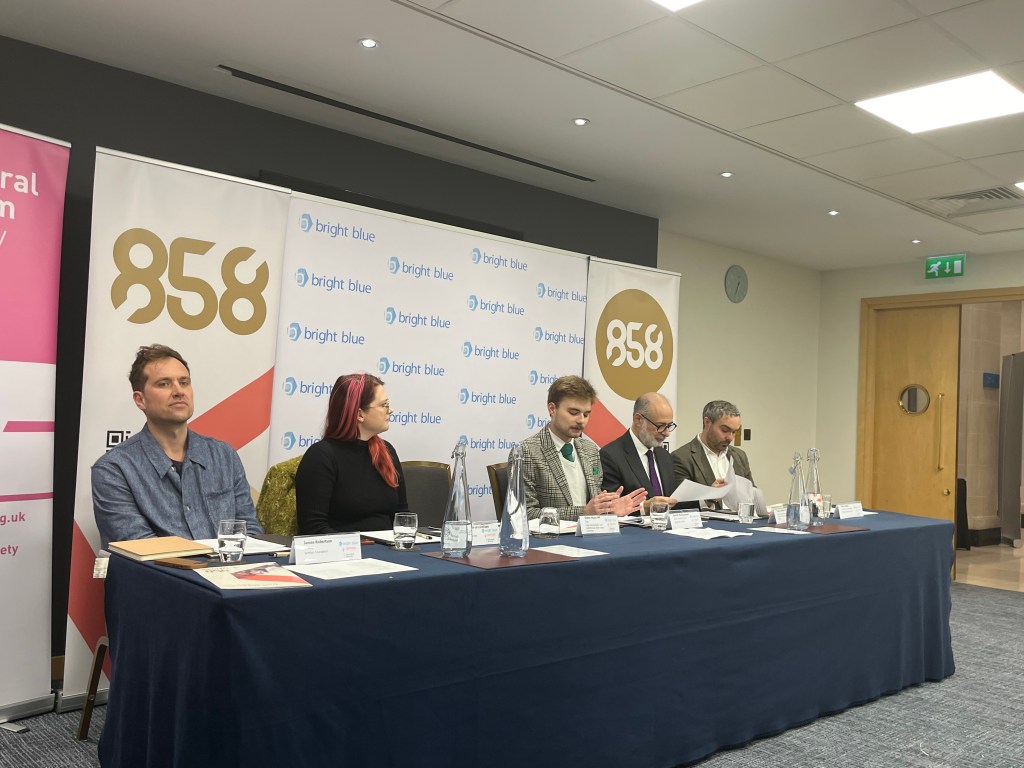
James Robertson from the Sortition Foundation argued that the only logical way forwards is to replace the Lords with a permanent citizens’ assembly. Imagine a “House of Citizens”—400 individuals selected by democratic lottery, truly reflective of the UK’s population. James painted a picture of ordinary citizens stepping up, deliberating with expert guidance, completing two-year terms. He described a different model of decision-making, grounded in trust and diversity. “Politics doesn’t work if people don’t trust it.” If the public’s faith in politicians is dwindling, perhaps the answer isn’t more politicians—but people from all walks of life.
The debate ended, as so many debates end, with agreement that something must be done but no consensus on what. It felt like one solution seemed glaringly absent and potentially unifying: why not ask people themselves? A citizens’ assembly on the future of the House of Lords could invite citizens to tackle its purpose, form, and future.
During the evening, there was also a great suggestion from the floor that I liked the sound of – one audience member said that if citizens’ assemblies work for policy deliberation, why not use them to hold other public bodies and organisations to account? They gave the example of the BBC. The suggestion resonated strongly with the thinking that has brought together the now 50 or so organisations that are part of the Citizens In Power Network with a vision to embed citizen voices into governance—not just in politics but across cultural and civic institutions.
You can find out more about the 858 campaign here that seeks to replace the House of Lords with a House of Citizens and even sign the petition if you want to get involved!
Categories: Citizen-led decision-making Culture, POLITICS and the everyday

 Hello, I'm David Jubb & this is my blog
Leave a comment